

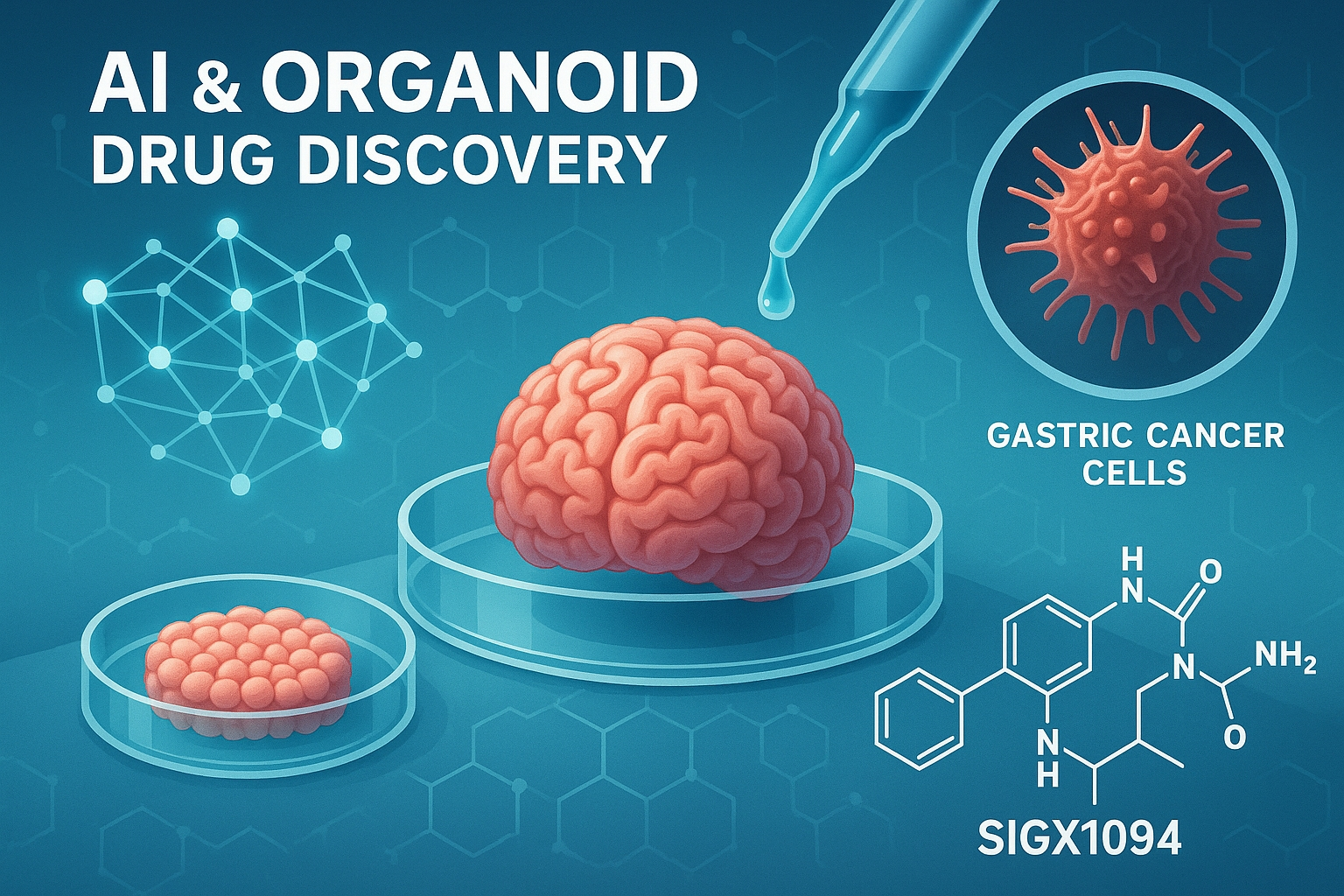
This marks a significant milestone in medical history, as it is the first novel drug developed through an AI- and organoid-integrated drug discovery platform to enter clinical trials. SIGX1094 is the world's first targeted therapeutic candidate for the treatment of diffuse gastric cancer (DGC). DGC is a rare cancer with extremely limited existing treatment options and a very poor patient prognosis. Signet's innovative approach involves building organoid models that reflect real patient genomic data and integrating them with an AI platform to accelerate the entire drug development process. A notable achievement is the collaboration with XtalPi (2228.HK), which led to the identification of FAK (Focal Adhesion Kinase) as a new therapeutic target and the derivation of a promising preclinical candidate in just six months. Compared to traditional drug development, which typically takes 10-15 years, reducing the timeline from concept to clinical entry to less than four years is a groundbreaking accomplishment. The FDA granted SIGX1094 Orphan Drug Designation in November 2024 and Fast Track Designation in February 2025, recognizing the drug's innovation and clinical necessity. Dr. Haisheng Zhang, CEO of Signet Therapeutics, emphasized, "The integration of organoid and AI technologies demonstrates a transformative power in accelerating the development of breakthrough therapies for cancer patients." In December 2024, the company secured approximately $10 million in pre-A round funding to support the clinical trials of SIGX1094 and the IND approval for its second pipeline.