

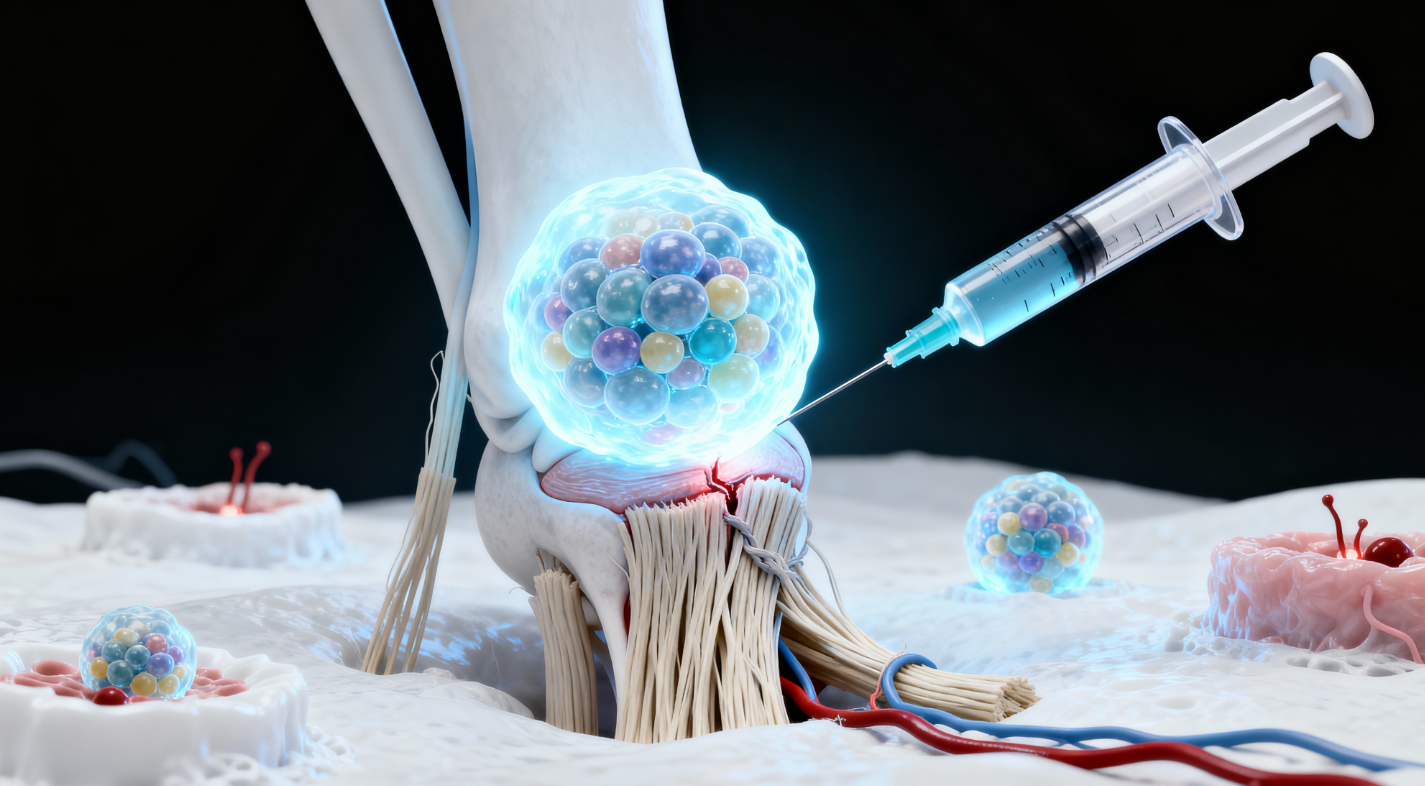
Expansion of Clinical Entry for Allogeneic Stem Cell Therapy With the Ministry of Health and Welfare's approval of three advanced regenerative medicine implementation plans, the clinical application of stem cell therapy is gaining momentum. The first is a high-risk clinical study involving the non-surgical injection of allogeneic umbilical cord-derived mesenchymal stem cells into patients with partial rotator cuff tears. Traditionally, surgical repair was essential for rotator cuff tears, but if damaged tendons can regenerate with just stem cell injections, patient burden would be significantly reduced. The second study involves administering organoids made from autologous salivary gland stem cells to patients with dry mouth due to Sjögren's syndrome. The third is another stem cell-based regenerative treatment, offering new possibilities for treating intractable diseases. Rationalizing Regenerative Medicine Regulations and Strengthening the Industrial Ecosystem Since the enforcement of the Advanced Regenerative Medicine Act in 2020, Korea has gradually expanded clinical research in regenerative medicine. However, experts point out that long-term investment and regulatory rationalization, similar to Japan's approach, are still needed. Professor Shinya Yamanaka's team in Japan received 1 trillion won in research funding to develop five induced pluripotent stem cell (iPSC)-based therapeutic technologies and conducted clinical trials at over 1,700 hospitals nationwide. Korea also needs large-scale investment through selection and focus, along with policies to simplify clinical approval procedures and enhance patient access. Currently, domestic stem cell technology is world-class, but commercialization is delayed due to regulations and a lack of investment. Strategy to Lead the Global Regenerative Medicine Market The global regenerative medicine market is projected to grow at an average annual rate of 25% to reach approximately 150 trillion won by 2030. Stem cell therapy is becoming a core technology for treating intractable diseases such as arthritis, spinal cord injury, myocardial infarction, and Parkinson's disease. Korean companies like Nature Cell, HLB Cell, Pharmicell, and CHA Biotech possess diverse stem cell therapy pipelines, with some already undergoing global clinical trials. Allogeneic stem cells, in particular, have high commercialization potential as they can be used as pre-manufactured products without needing to collect cells from the patient themselves. If the government and industry collaborate to rationalize regulations, expand R&D investment, and establish a global clinical network, Korea can emerge as a global leader in regenerative medicine.