

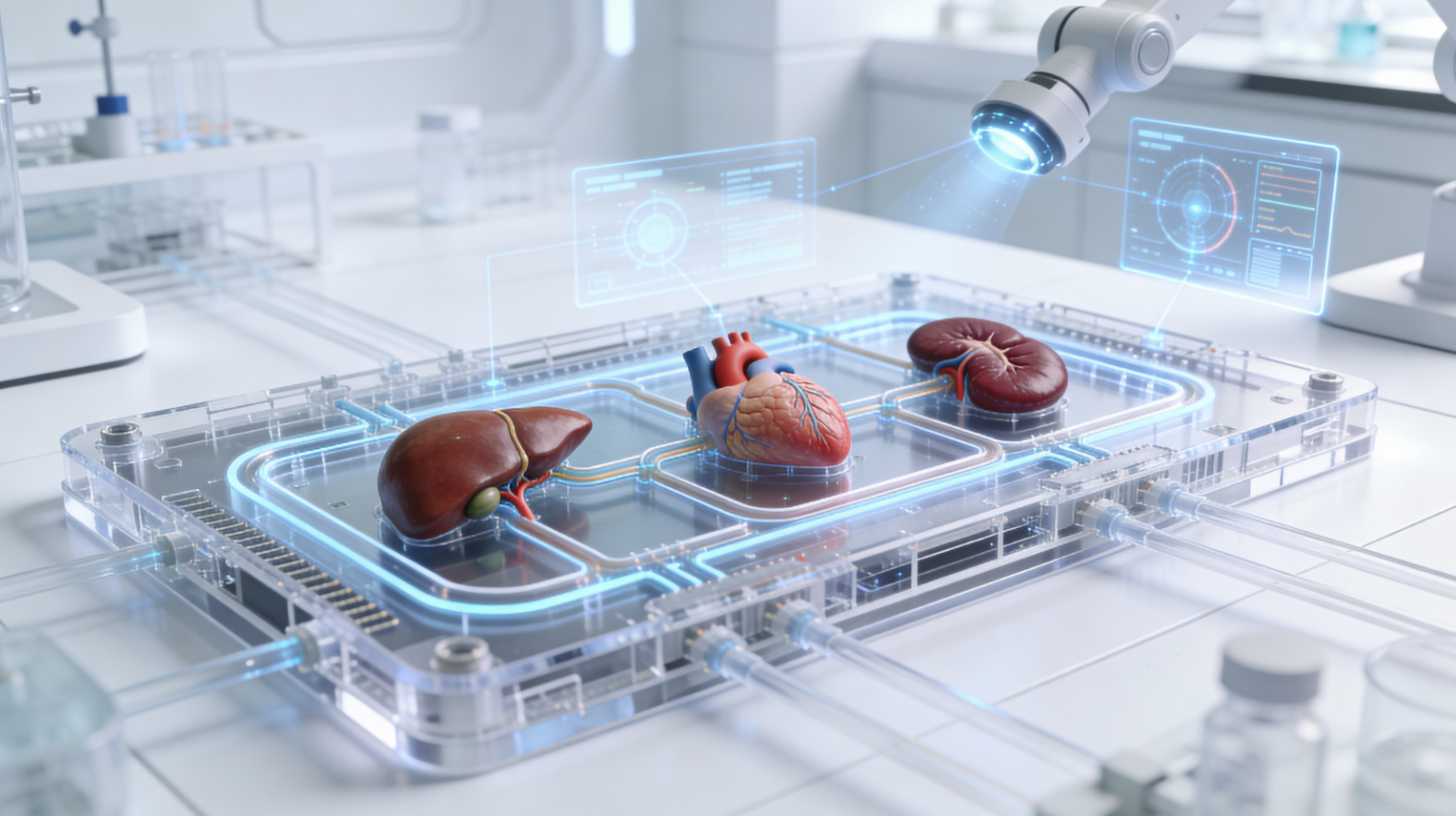
"We create human organs on a chip to precisely predict new drug efficacy and toxicity." Woojung Bio announced on January 6th that it has signed a multi-year strategic partnership with Xellar Biosystems, a U.S.-based AI-driven Organ-on-a-Chip (MPS) platform company. Organ-on-a-Chip technology is a next-generation approach that reproduces miniaturized 3D tissue models of human organs such as the liver, heart, kidneys, and lungs on microfluidic channels. It enables human-relevant non-clinical research, serving as an alternative to animal testing. Xellar is a leading company founded by researchers from Harvard's Wyss Institute and Emulate, possessing AI-driven computer vision and advanced data analysis capabilities. The combination of AI and Organ-on-a-Chip technology revolutionizes the accuracy of early-stage drug development. Traditional non-clinical trials rely on animal testing, but due to physiological differences between animals and humans, approximately 90% of new drug candidates fail in clinical trials. As Organ-on-a-Chip models are composed of human cells, they can predict drug efficacy and toxicity in an environment closer to the human body. Xellar's platform combines 3D human tissue models with machine learning to analyze cellular responses on the chip in real-time, predicting the likelihood of clinical success for drugs at an early stage. Woojung Bio will provide translational and non-clinical research infrastructure, and the collaboration between the two companies is expected to enhance both research efficiency and data reproducibility. The U.S. FDA will implement a policy from 2025 that no longer mandates animal testing for new drug approvals, actively encouraging the adoption of alternative technologies like Organ-on-a-Chip. Cheon Hee-jung, CEO of Woojung Bio, stated, "The trend of integrating human-relevant approaches into non-clinical research is strengthening. Through our collaboration with Xellar, we aim to enhance our competitiveness in the next-generation non-clinical market." Xin Xie, CEO of Xellar, emphasized, "This collaboration is an important milestone for expanding Xellar's Organ-on-a-Chip and AI technologies into the global market. It will provide greater value across the entire life science ecosystem." The fusion of Organ-on-a-Chip and AI is expected to become a key technology for reducing animal testing and increasing the success rate of new drug clinical trials.