

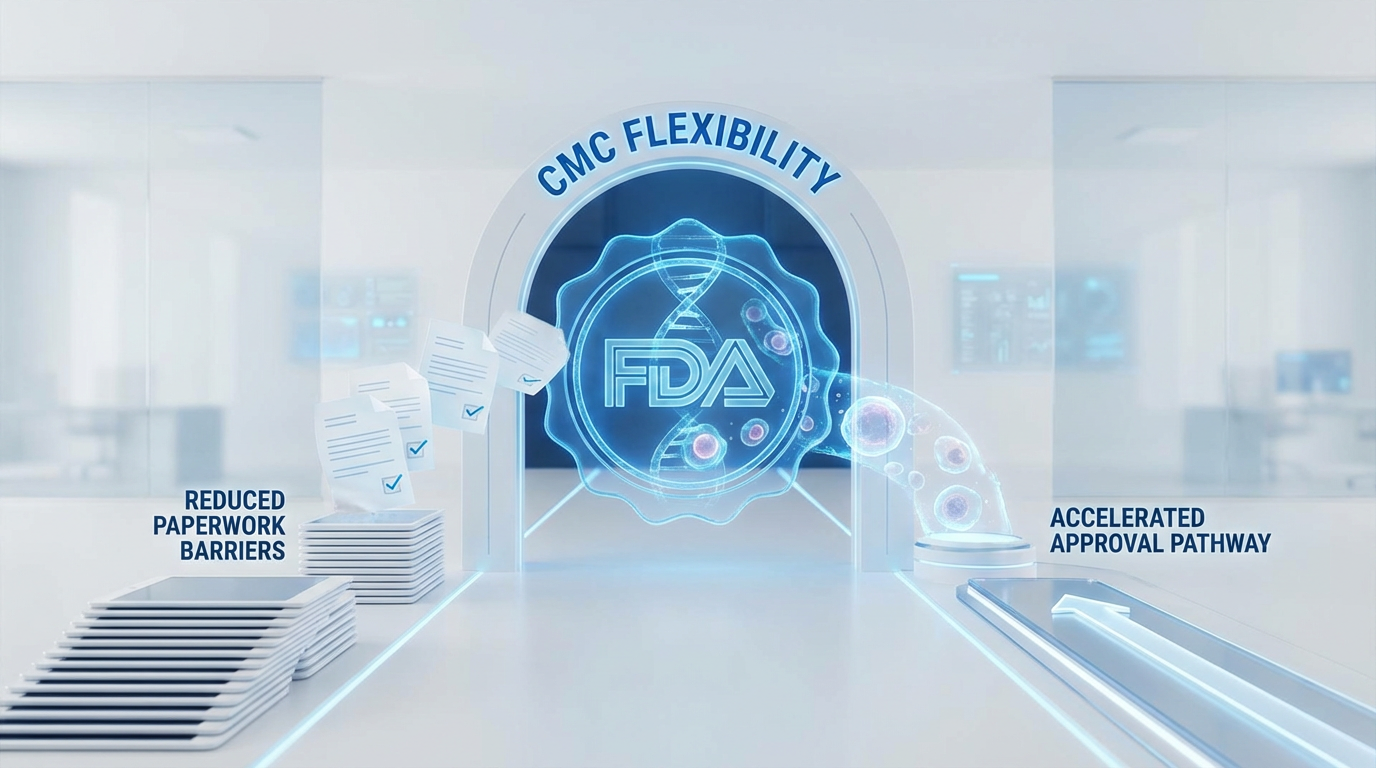
The U.S. FDA announced on January 11, 2026, an expansion of regulatory flexibility for Chemistry, Manufacturing, and Controls (CMC) pertaining to Cell and Gene Therapies (CGT). This initiative aims to alleviate excessive documentation requirements in the early stages of development, shifting focus instead to clinical data-based approvals. Key aspects of this announcement include expanded CMC flexibility. Approval procedures for manufacturing process changes will be streamlined, enabling developers to improve processes more quickly. Additionally, support for Biologics License Applications (BLA) will be strengthened. Pre-submission consultations between developers and the FDA will be expanded, allowing for closer collaboration with the FDA even before submitting an application. Priority review pathways for rare diseases will also be broadened, enabling expedited approval for cases with small patient populations and high urgency. The FDA has approved approximately 50 cell and gene therapies over the past decade, including prominent examples like CAR-T cell therapies and CRISPR gene-editing therapies. However, the manufacturing processes for these advanced therapies fundamentally differ from traditional small-molecule new drugs. Dealing with living cells makes quality control challenging, and small-scale production is also difficult. This regulatory relaxation is expected to double the speed of development. Particularly for rare disease treatments or personalized gene therapies, where patient numbers are small and urgency is high, expedited approval pathways will allow patients to receive treatment more quickly. The Director of the FDA's Center for Biologics Evaluation and Research (CBER) stated, "A common-sense approach is needed for patients and those striving to develop treatments," adding, "We will create balanced regulations that ensure safety without stifling innovation." Vertex's 'Casgevy' (a CRISPR gene-editing therapy) serves as a prime example. Casgevy, the world's first approved CRISPR therapy in 2023, treats sickle cell disease and beta-thalassemia. This regulatory relaxation is expected to further accelerate the development of future CRISPR-based therapies. Industry experts believe this regulatory easing will strengthen the global competitiveness of the U.S. biotech industry. Especially as China and Europe rapidly catch up in the cell and gene therapy sector, the FDA's flexible regulations will provide a significant advantage to U.S. companies. The Korean biotech industry is also paying close attention to this announcement. With efforts underway to relax advanced regenerative medicine regulations in Korea, there is a growing call to benchmark the FDA's approach. 🔗 Source: