

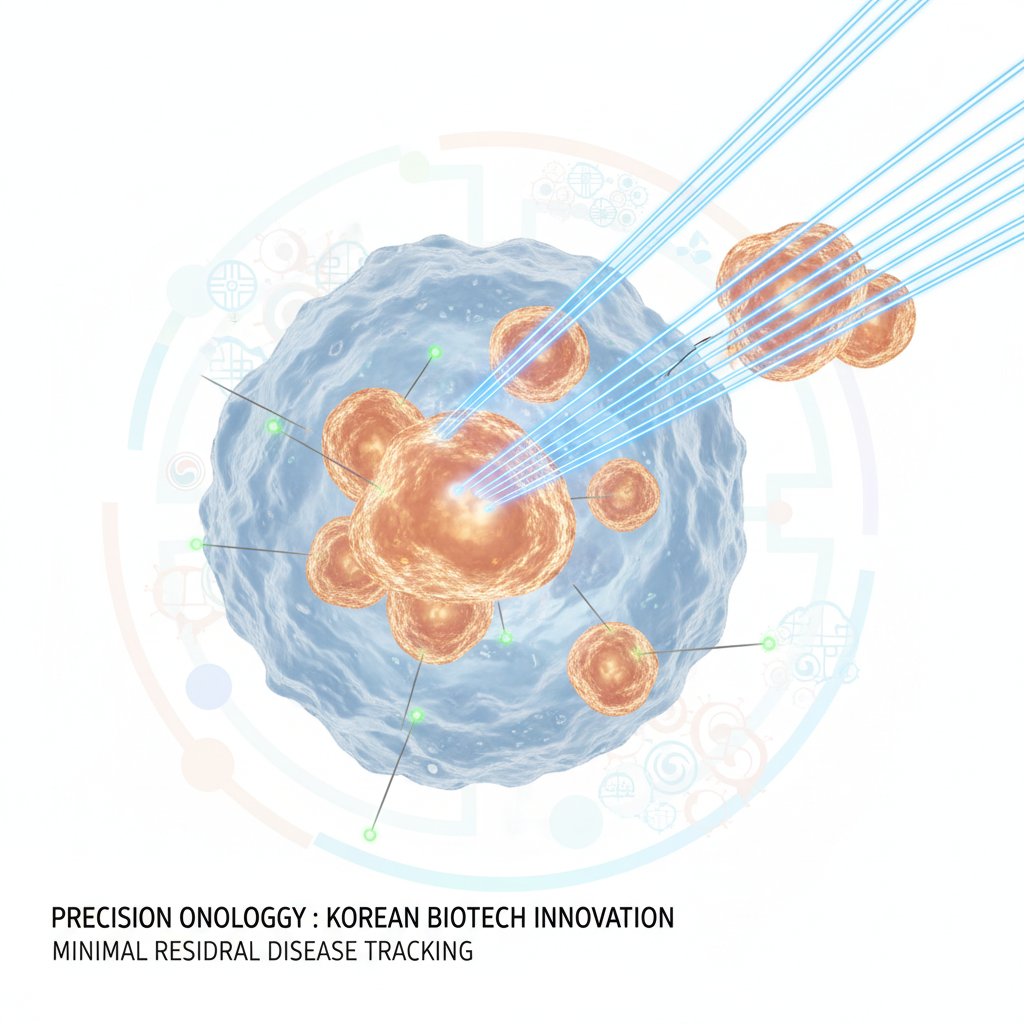
Minimal Residual Disease (MRD) diagnostic technology, identified as a key cause of cancer recurrence, is rapidly emerging as a critical factor. MRD refers to minute amounts of cancer cells that are not detectable by imaging equipment after treatment and are considered a major cause of recurrence even after a complete remission diagnosis. Its importance has grown recently as global regulatory bodies accept MRD as an indicator for treatment success, and it is slated to be a major agenda item at the American Association for Cancer Research (AACR). The global MRD diagnostic market is projected to grow to 7.6 trillion Korean Won by 2035, with domestic companies accelerating the development of ultra-high sensitivity technologies. EngeneBio has achieved a detection performance of 0.001% mutant allele frequency with its Next-Generation Sequencing (NGS)-based MRD diagnostic product. This technology is utilized for evaluating treatment response and predicting early recurrence in hematologic cancer patients, and it has obtained a domestic patent for its acute myeloid leukemia mutation tracking algorithm. Daewoong Biomedics and IMBdx are also entering the MRD diagnostic market, focusing on mass spectrometry-based protein testing, circulating tumor cell analysis, and developing solutions for early cancer recurrence detection, respectively. Experts predict that MRD diagnosis will become an essential foundation for anticancer drug clinical design and development. Companies that secure precision comparable to U.S. Food and Drug Administration (FDA) guidelines are expected to lead the next-generation precision medicine market, drawing attention to the role of K-Bio.