

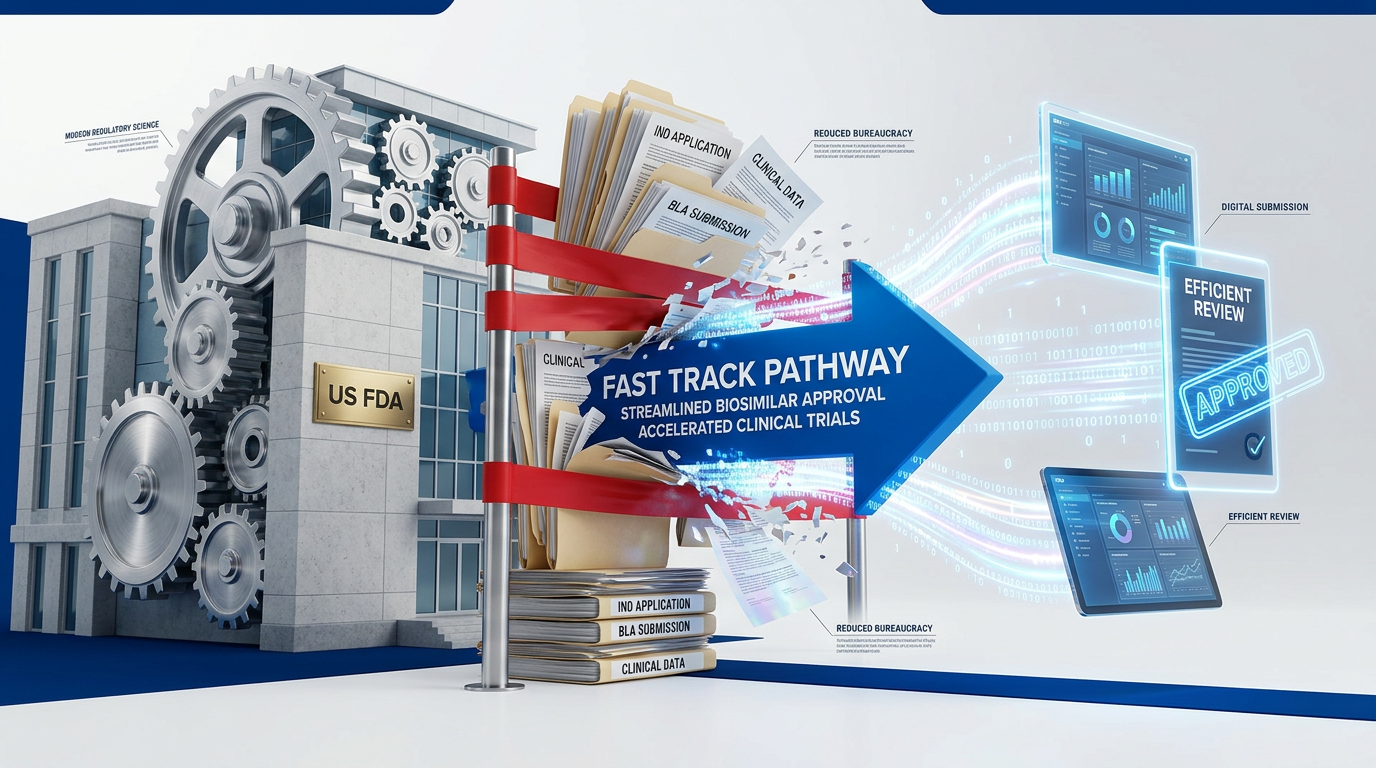
The FDA announced its intention to simultaneously streamline approvals for clinical trials and biosimilars through its FY2027 (starting October 2026) budget request. The requested budget is $7.227 billion (approximately 10.9 trillion Korean Won), an increase of $160 million from the previous year. The most significant change is the creation of a 'rapid IND pathway' as an alternative to the existing Investigational New Drug (IND) application. This new structure significantly lowers the barrier to entering Phase 1 clinical trials if regulatory standards can be met with pre-clinical data validated by New Approach Methodologies (NAMs). It aims to eliminate redundant and time-consuming requirements of the existing IND process while maintaining safety and ethical standards. Even greater changes are coming for biosimilars. The FDA plans to abolish the interchangeable biosimilar designation itself and pursue legislative amendments to consider all approved biosimilars as interchangeable. Until now, pharmacists required separate clinical data and standards to substitute an original drug with a biosimilar in pharmacies, but this hurdle will be removed. Biosimilar reviews will also be handled by a single department instead of the current two, accelerating approval times. The requirement for third-party comparative pharmacokinetic (PK) testing, previously needed when using reference products approved overseas (such as in Europe), will also be relaxed, increasing the utility of global clinical data. This policy is a direct boon for Korean companies. Celltrion and Samsung Bioepis have held the record for the most FDA biosimilar approvals for two consecutive years in 2024 and 2025. The abolition of the interchangeable designation will accelerate biosimilar market penetration, directly leading to an increased prescription share for Korean products in the U.S. The rapid IND pathway will significantly reduce the burden for domestic biotech ventures entering U.S. Phase 1 trials. The FDA explained that this policy is expected to "bring early-stage clinical trials that were moving to China and Australia back to the U.S." and also emphasized the additional benefit of reducing animal testing. From the perspective of K-bio, this represents a structural change that simultaneously reduces the cost and time of entering the U.S. market.