

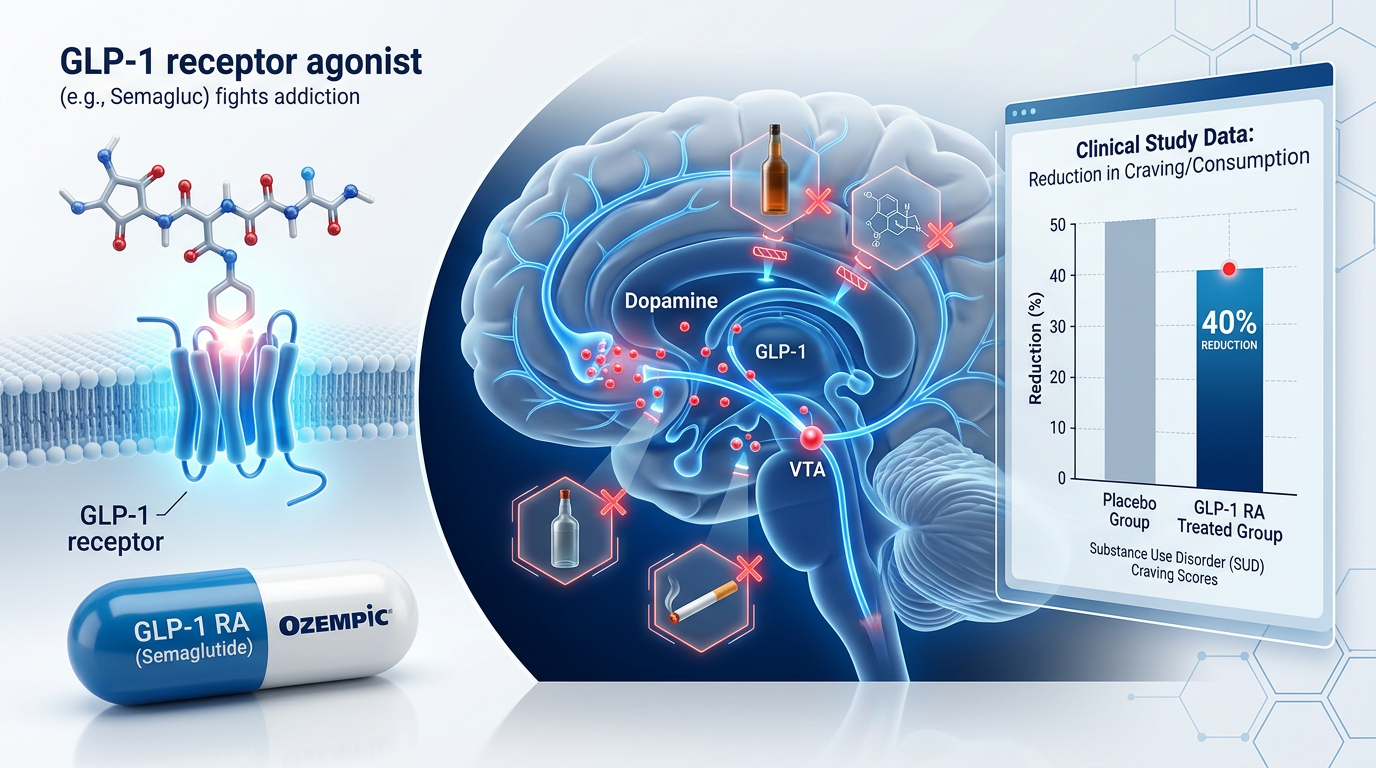
Large-scale research has revealed that GLP-1 receptor agonists (such as Ozempic, Wegovy, and Mounjaro), typically used for obesity and diabetes treatment, are also effective in preventing substance addictions, including alcohol, nicotine, and opioids. This study, which analyzed data from over 1.3 million veterans, found that GLP-1 drug users had a 40% lower risk of opioid overdose and a 50% reduction in alcohol use disorder. These medications, originally designed as incretin hormones to regulate blood sugar and suppress appetite, have demonstrated an 'off-target effect' by inhibiting the brain's dopamine reward circuit, thereby reducing cravings themselves. Early signals have also been detected for behavioral addictions like nicotine, cocaine, and even gambling. The study's significance lies in its scale and scope. A key finding is that a single substance showed simultaneous efficacy across various addictive substances, including alcohol, nicotine, opioids, and cocaine. The mechanism involves GLP-1 receptors directly modulating the dopamine pathway in the brain's reward circuit, weakening the 'craving' for substances. Unlike existing addiction treatments that target specific substances, GLP-1 is interpreted as possessing a 'universal anti-addiction mechanism' that regulates the entire reward circuit. With the added benefit of reduced cardiovascular risk, combining GLP-1 with lifestyle improvements could offer multiple health advantages. However, limitations are also clear. The study population was predominantly older white male veterans, with only about 35,000 women, and the data was concentrated on diabetic patients, making it premature to generalize to the entire population. Experts commented, "While large-scale randomized clinical trials are still needed to definitively conclude that GLP-1 prevents addiction, the consistent results from an observational study of this magnitude are significant in themselves." The trend of the GLP-1 market expanding beyond obesity to include indications for addiction, cardiovascular disease, and liver disease has become evident, supporting the projection of a $150 trillion (approximately 2,250 trillion KRW) GLP-1 market by 2030.