

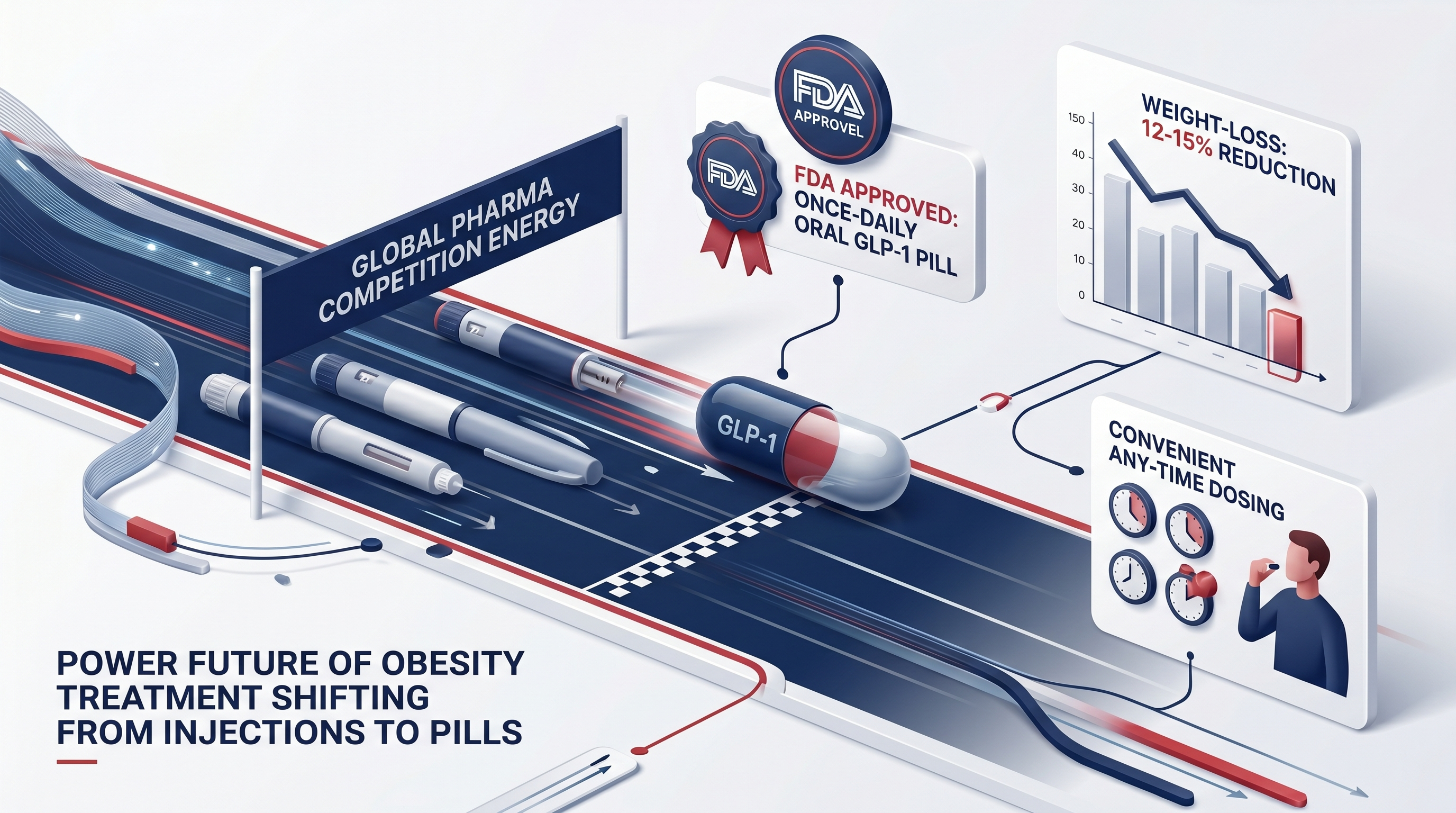
The U.S. FDA's approval of Eli Lilly's oral obesity drug, orforglipron, on April 1st has ushered the obesity treatment market into a new phase. The product name is Foundayo. This once-daily oral GLP-1 receptor agonist demonstrated a 12-15% reduction in patient body weight during clinical trials. While injectable drugs like Wegovy and Zepbound have led the market until now, an “effective pill” is now poised to significantly disrupt the landscape. This is why some interpret this as a turning point, shifting obesity treatment from a hospital-centric model to a broader lifestyle treatment market. Eli Lilly's strength extends beyond mere approval. Foundayo can be taken regardless of food intake, offering high patient convenience. In contrast, competitor Novo Nordisk's oral obesity drugs come with conditions such as morning fasting and a waiting period. Such differences can play a surprisingly significant role in the early market. For patients, the ease of administration is often as crucial as efficacy in determining treatment adherence. There is a high probability that new patient segments, particularly those with needle phobia or who prioritize convenience, will rapidly expand the oral drug market. The market will no longer be a two-way race between Eli Lilly and Novo Nordisk. According to Reuters, Structure Therapeutics, AstraZeneca, Roche, Pfizer, Innovent, Huadong, and Athletis are also entering the oral obesity drug development arena. Some candidate substances have shown double-digit weight loss in mid-stage clinical trials, and several companies are already considering entry into late-stage trials. The industry anticipates that while injectables will not disappear entirely, oral obesity drugs could account for approximately 20% of the total obesity drug market by 2030. Ultimately, the future competition is shifting from “who gets approved first” to “who can be taken more conveniently, for longer, by more patients.”