

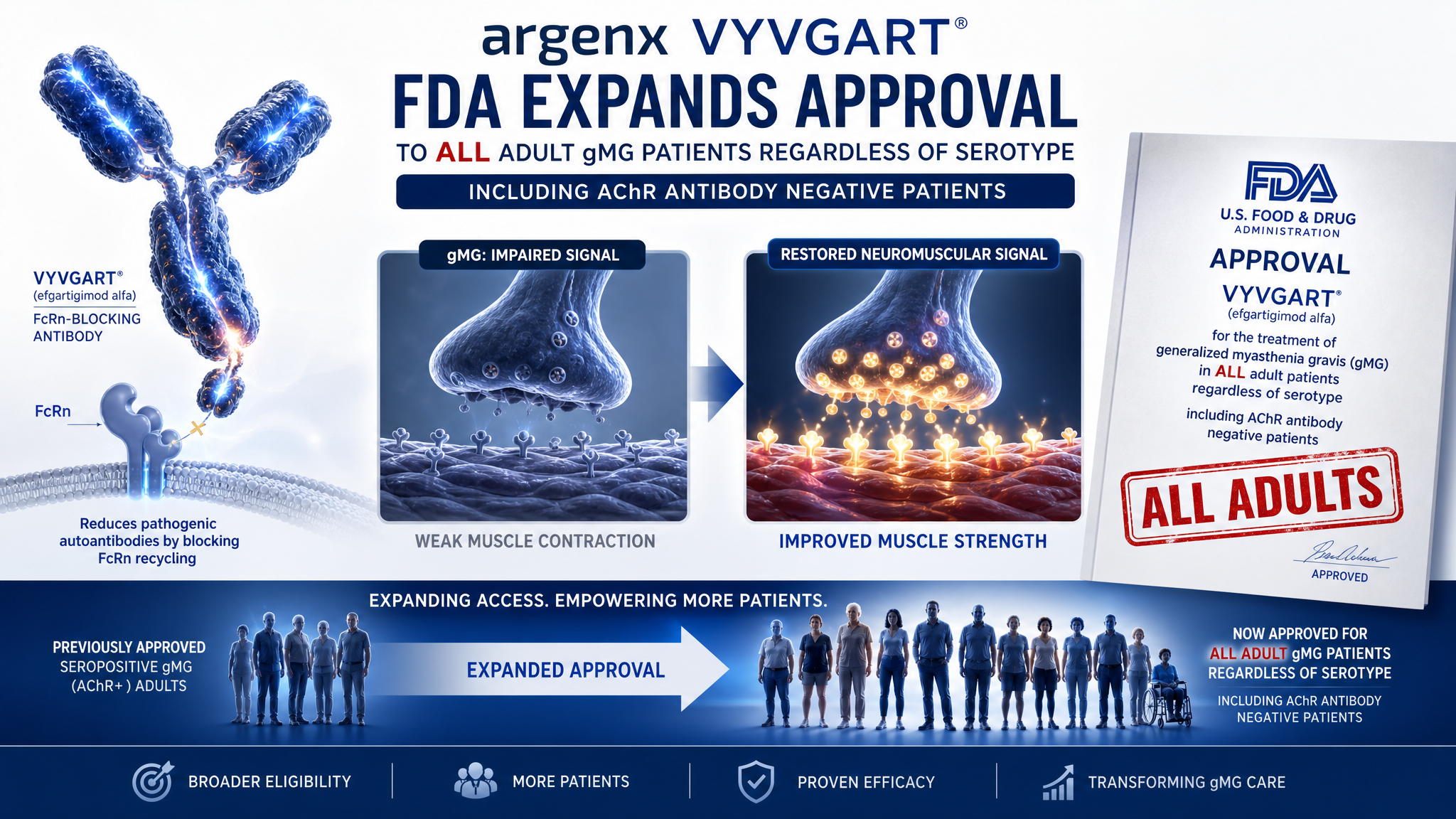
On May 8, the FDA approved the expanded indication for argenx's Vyvgart and Vyvgart Hytrulo to include all adult generalized myasthenia gravis (gMG) patients. Previously, it was only available for AChR antibody-positive patients, but this expansion now encompasses AChR-Ab negative patients. As AChR-Ab negative gMG is an area with few targeted treatment options, it is being hailed as “the first broad-spectrum targeted therapy regardless of serotype.” This is not merely an expansion of the label, but a redrawing of the standard treatment pathway for the autoimmune disease gMG itself. This expanded approval further demonstrates that the FcRn blockade mechanism is establishing itself as a “platform” rather than a “narrow targeted therapy” in the autoimmune field. argenx is already competing with CD20 antibodies in active lupus nephritis and is extending the same mechanism to other autoimmune diseases such as neuromyelitis optica and pemphigus. From a domestic perspective, this signals market expansion for companies developing FcRn-based autoimmune new drugs. When viewed alongside Reuters' report from the same week about once-weekly CAR-T controlling HIV infection, the global healthcare trend in the second week of May clearly shows a shift in focus towards “autoimmunity + cell and gene therapy.” Delving deeper, this label expansion has the potential to change physician prescribing patterns. Previously, targeted therapy was initiated only after antibody test results confirmed positivity, but now Vyvgart can be considered immediately for adult patients clinically suspected of having gMG. This means reducing the “golden hour of treatment” that was often lost during the diagnostic stage. If this trend solidifies, domestic autoimmune drug developers are also likely to design “broad-spectrum indications regardless of serotype” from the outset, rather than “serotype-limited” indications. Simultaneously, from the perspective of insurance companies, as the patient pool grows, pressure for drug price negotiations may intensify, presenting argenx with the dual challenges of “market expansion” and “price defense.”