

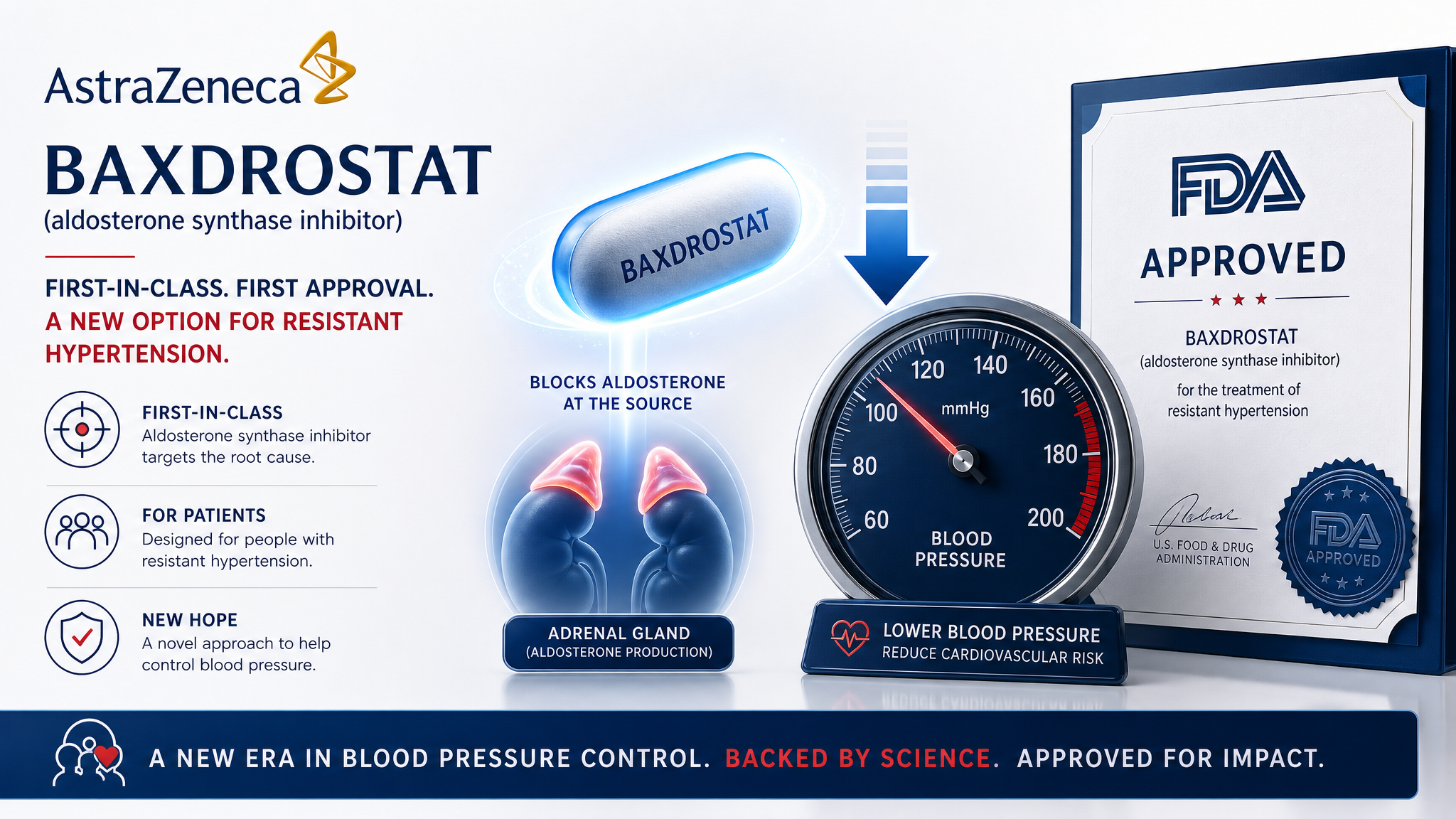
On May 18, the FDA approved AstraZeneca's baxdrostat under the brand name 'Baxfendy' in the United States. It was approved for use in combination with other drugs for patients whose blood pressure is not controlled by existing antihypertensive agents. In late-stage clinical trials, when a 2mg dose was added to standard therapy, systolic blood pressure decreased by 9.8 mmHg (placebo-corrected) at week 12, and by 8.7 mmHg with a 1mg dose. The company anticipates peak annual sales for this drug to exceed $5 billion, with additional clinical trials underway for chronic kidney disease and heart failure indications. This drug was a key asset of CinCor Pharma, which AstraZeneca acquired for $1.8 billion in 2023. The most significant aspect of this approval is the introduction of a “new class” of mechanism into the hypertension market. While existing diuretics, ACE inhibitors, and ARBs act on blood vessels and kidneys, baxdrostat specifically blocks aldosterone production in the adrenal glands. This effectively provides the first targeted option for patients with “resistant hypertension” whose blood pressure remains uncontrolled due to hormonal causes. Considering that 1.4 billion people worldwide, including approximately 120 million adults in the U.S. (nearly half the adult population), suffer from hypertension, the market size is unparalleled compared to other areas. Taking a deeper look, this approval should be viewed as an extension of the trend toward “integrated cardiovascular metabolic treatment.” AstraZeneca has already linked diabetes, heart failure, and chronic kidney disease with its SGLT2 inhibitor Farxiga, and now, by adding baxdrostat, it aims to complete a picture where one company manages hypertension in the same patient population. This strategy precisely mirrors Hanmi Pharmaceutical's “efpeglenatide = obesity + diabetes + cardiovascular” approach. In essence, the global market is shifting from single-indication new drugs to a competition for “cardiovascular metabolic full packages.” AstraZeneca's pre-emptive market entry before Mineralys' lorundrostat decision in December is also a crucial point. From Korea's perspective, beyond Hanmi, the real variable will be what cards Alteogen and Celltrion play in the cardiovascular metabolic field in the future (e.g., SC formulation conversion, biosimilars).