

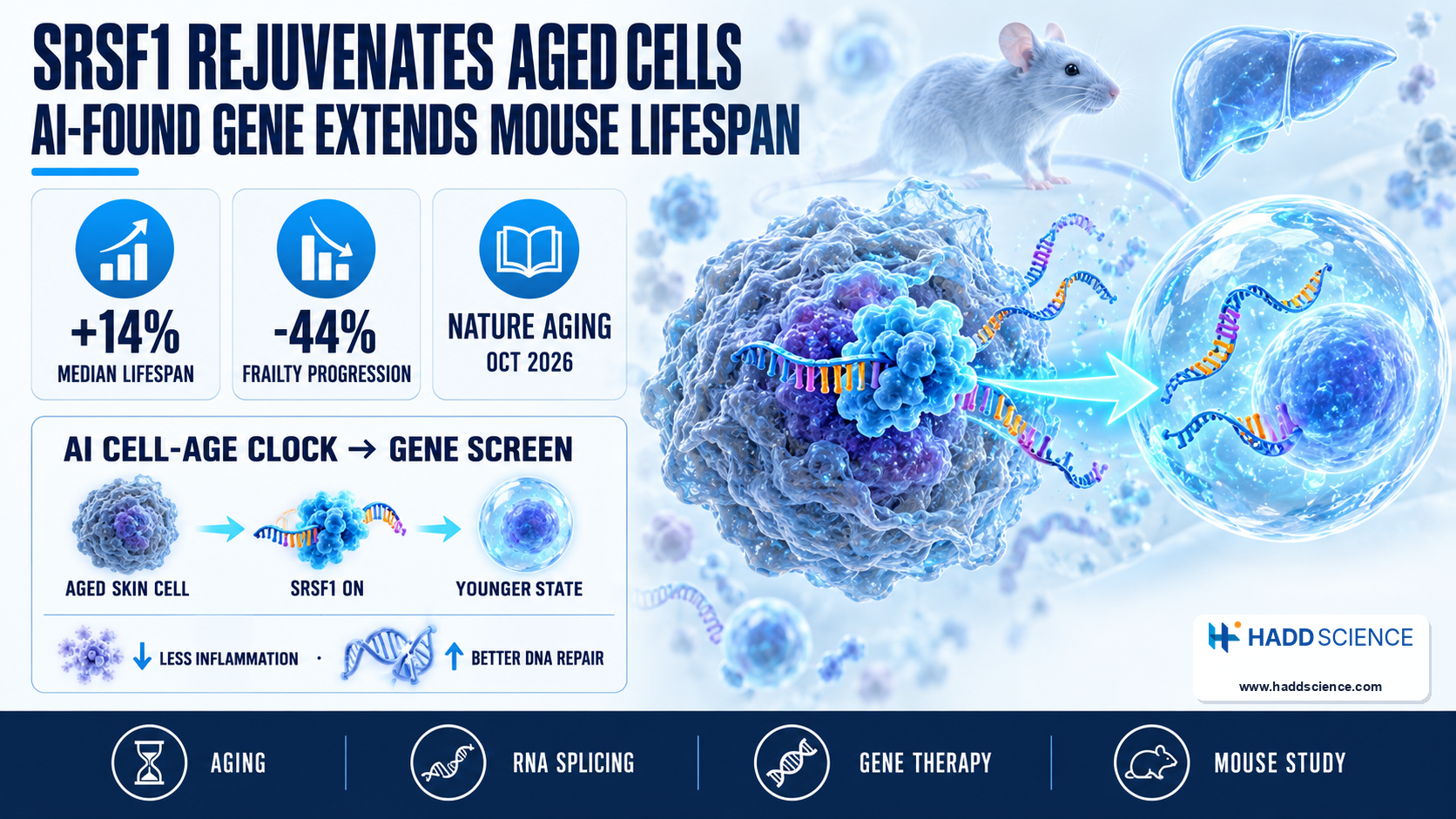
An international collaborative research team, including Professor George Church of Harvard Medical School and Dr. Alexandru Plesa of the Wyss Institute, announced in the international academic journal Nature Aging on October 14 (local time) that they have identified 'SRSF1', a gene that restores aged cells to a youthful state. The leading technology for reprogramming cells to an early state is the four genes (Yamanaka factors) discovered by Professor Shinya Yamanaka, who won the 2012 Nobel Prize in Physiology or Medicine. However, overactivating these genes posed limitations, as cells could lose their original functions or face an increased risk of cancer. The research team first developed an AI model that estimates the biological age of cells based on gene expression patterns in human skin cells. They then activated genes suspected to be associated with aging one by one, using AI to measure the degree of cellular rejuvenation. SRSF1 demonstrated the most significant effect. It is a gene involved in processing genetic information (RNA) required when cells produce proteins. When SRSF1 was activated in aged human skin cells, cellular senescence and chronic inflammation decreased, while damaged DNA repair capabilities improved. Unlike the Yamanaka factors, the cells regained the characteristics of young cells without losing their original functions. In mouse experiments, SRSF1 was delivered into aged mice using viral vectors. Although the gene was primarily delivered to the liver, anti-aging effects were observed throughout the entire body. Treated mice showed a 44% slower progression of frailty and a 14% longer median survival time. The research team suggested that changes in the liver may have influenced aging in other organs as well. However, these results represent preliminary research obtained from cultured human cells and mice. For human application, technologies to safely deliver genes to target tissues and precisely regulate their activation levels must first be developed. Long-term safety, particularly risks associated with cellular proliferation, remains to be further investigated.