

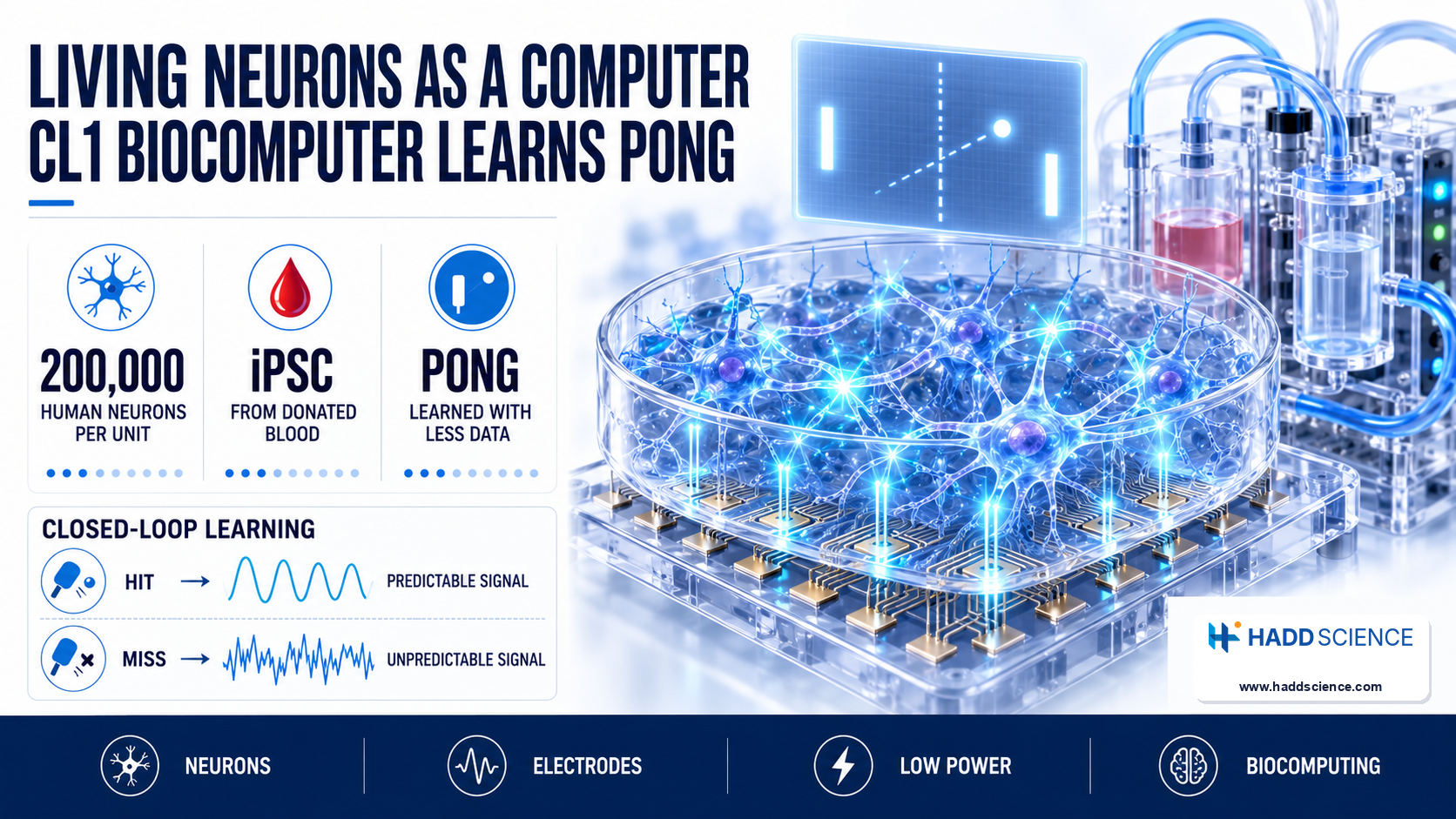
Cortical Labs, a startup based in Melbourne, Australia, operates CL1—a biocomputer that performs computations using living human brain cells. Dong-A Science's YouTube channel SEIZE visited the facility to report on site. A single CL1 unit contains approximately 200,000 brain cells. Most of the hardware consists of life support equipment designed to keep the cells alive, including nutrient solution, an oxygen-carbon dioxide gas mixture, heaters for temperature regulation, waste filters, and circulation pumps. The brain cells are generated from donated human blood. Blood cells are reprogrammed into induced pluripotent stem cells (iPSCs) and then differentiated into neural cells. This method of reprogramming adult cells back into stem cells earned the Nobel Prize in Physiology or Medicine in 2012. The cells grow on top of electrodes. Researchers apply electrical stimulation to the cells through these electrodes and read the electrical signals emitted by the cells. Because the system can be rented and accessed remotely, researchers from various continents, including South Korea, connect to use it. This is why the company refers to the facility as a 'biological data center.' Their flagship experiment involves the arcade game Pong. The ball's position is communicated via electrical stimulation, and specific neural signal patterns are designated as 'left' or 'right' paddle movements. When the paddle hits the ball, a regular signal is delivered; when it misses, an unpredictable, irregular signal is given. This learning framework relies on the theory that brain cells actively seek to avoid unpredictable stimulation. The company explains that through this method, the cells learned to play Pong using less data than conventional AI. CEO Brett Kagan states that the goal is not to replace existing AI. He notes that even the most advanced robots cannot yet adapt to environments as well as a honeybee, whereas biological systems excel at this task. The company is initially targeting fields requiring real-time adaptability, such as robot control. This initiative is driven by the high power consumption of current AI systems. The human brain operates on an amount of power equivalent to a small light bulb. The hope is that enabling computation with lower data and power requirements could help bypass a major bottleneck in AI scaling. However, the claims regarding learning efficiency currently rely on the company's own explanations, and the exact tasks for which this technology holds an advantage—and to what extent—have yet to be broadly verified. Ethical guidelines, including the scope of donor consent, must also be clearly established. The company stated that it accepts donors strictly within approved ethical boundaries and is continuously updating those standards.