

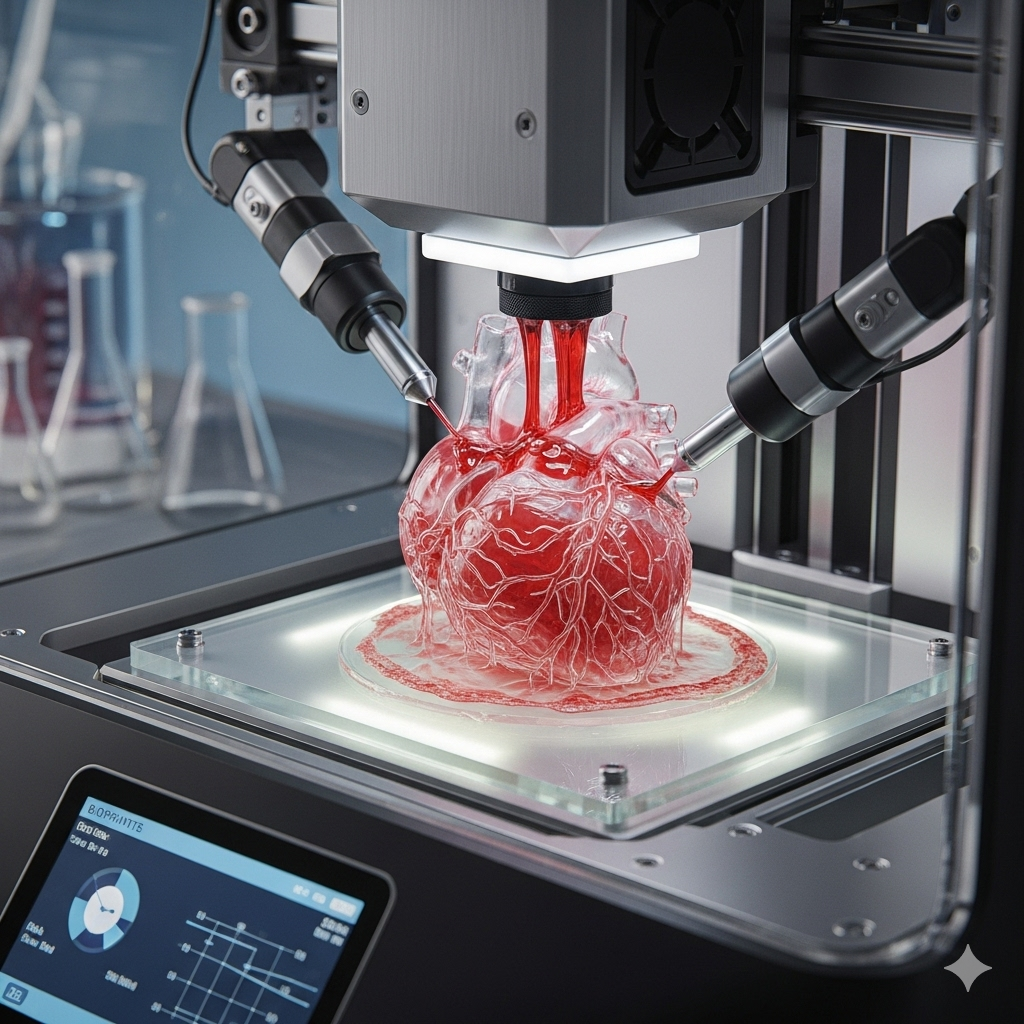
3D bioprinting is a technology that creates three-dimensional structures similar to actual organs by using 'bio-ink,' a mixture of living cells and biomaterials. This technology, which builds structures layer by layer based on computer modeling, has the potential to solve organ transplant issues and accelerate drug development. Notably, since organs are created from the patient's own cells, the risk of immune rejection during transplantation can be minimized. To date, research on printing various tissues such as skin, cartilage, and bone has been successfully conducted. Remaining Challenges and Future Outlook However, there are still many challenges to overcome before this technology can be commercialized. The biggest difficulty lies in creating complex vascular networks. It is extremely challenging to perfectly implement blood vessels that supply oxygen and nutrients to thick tissues. Furthermore, accurately mimicking structures where multiple cells and functions operate in a complex manner, just like real organs, is another challenge. Nevertheless, 3D bioprinting is gaining attention as a core technology that will lead the future of regenerative medicine and tissue engineering. Source: Advanced Materials - 3D Bioprinting of Functional Tissues and Organs