

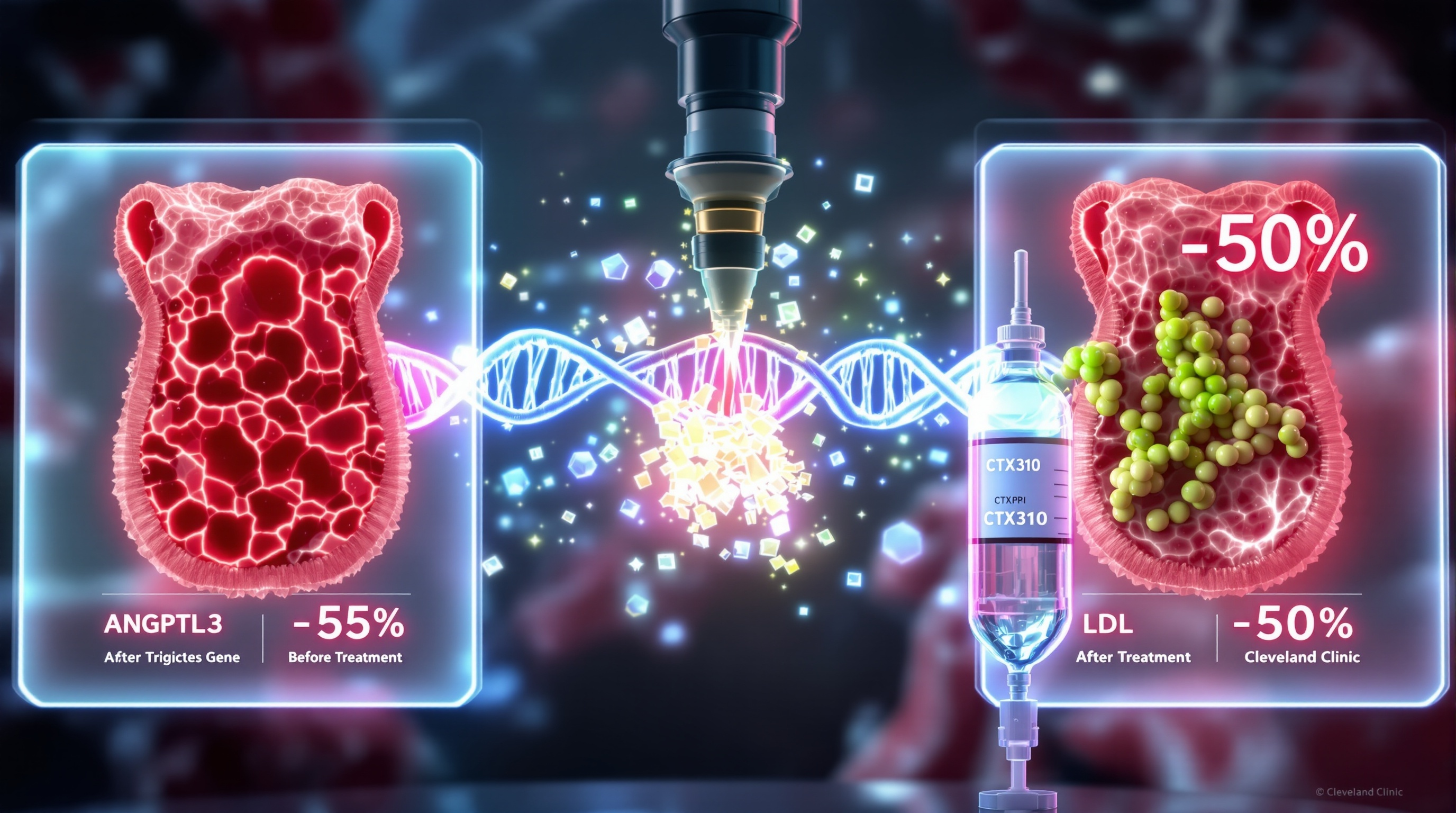
According to research presented at the American Heart Association (AHA) scientific sessions in New Orleans on November 8th and published in the New England Journal of Medicine (NEJM), CRISPR Therapeutics' experimental gene therapy, CTX310, reduced triglycerides by an average of 55% and LDL cholesterol by 50% in four patients who received the highest dose. This effect appeared two weeks after treatment and lasted for at least two months. Dr. Steven Nissen of Cleveland Clinic emphasized, "There has never been a treatment that can lower both LDL and triglycerides by nearly 50% simultaneously." Hypercholesterolemia is a major risk factor for heart attack and stroke, with hundreds of millions of people worldwide taking statin drugs daily. However, CTX310 demonstrated the potential for lifelong effects with a single, two-hour infusion. "Turning off the ANGPTL3 gene!" A congenital genetic defect became the idea for the treatment. CTX310 works by permanently 'switching off' a gene called ANGPTL3. Researchers observed that people with a naturally inactivated ANGPTL3 gene have a lower lifelong risk of heart disease without significant side effects. CTX310 uses CRISPR to edit this gene and achieve the same effect. While Regeneron's Evkeeza also targets the same gene, it requires monthly injections, whereas CTX310 is a one-time treatment. This Phase 1 clinical trial, conducted in Australia, New Zealand, and the UK, tested five different doses in 15 patients aged 31 to 68. All participants had high triglycerides, high LDL cholesterol, or both, and had failed previous treatments. Three participants experienced temporary nausea and elevated liver enzymes but recovered quickly. Participants will be followed for one year, with an option for an additional 15 years of long-term follow-up. "Market launch in 4-5 years, price under $100,000!" A game-changer for tens of millions. Sam Kulkarni, CEO of CRISPR Therapeutics, stated, "We are just beginning to discover the power of gene editing in common diseases." He added, "Most gene therapies have been attempted for rare diseases, but now we are expanding to common diseases that can benefit tens of millions of people." The company plans to submit this data to the US FDA to begin Phase 2 clinical trials in 2026, aiming for product launch within 4-5 years. Initially targeting patients with genetic hypercholesterolemia, it could ultimately become an option for tens of millions of Americans. While Casgevy, a sickle cell anemia treatment already sold by CRISPR and Vertex, costs $2 million and requires a year-long cell collection and editing process, CTX310 is a simple infusion and is expected to cost less than $100,000. Dr. Luke Laffin of Cleveland Clinic predicted, "If we can offer a safe, lasting, one-time treatment instead of daily pills or monthly injections, it will transform clinical practice."