

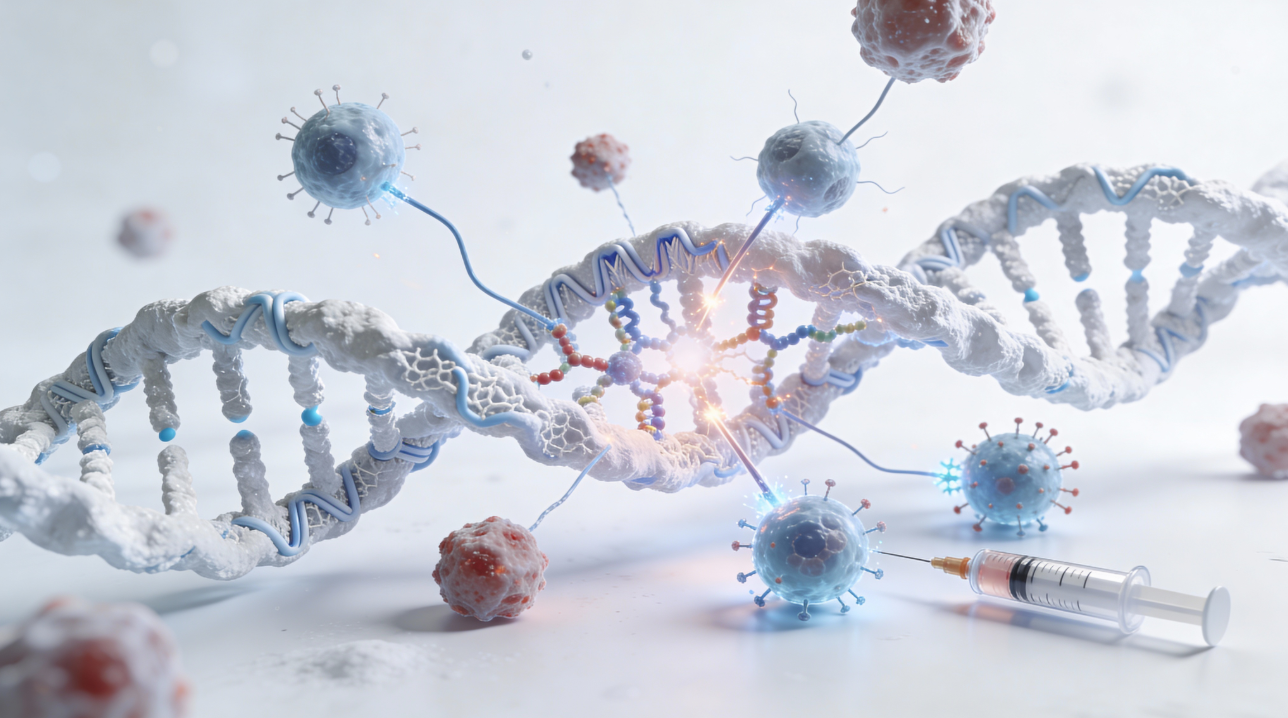
Research presented at the European Society for Medical Oncology (ESMO) in October 2025 revealed that COVID-19 mRNA vaccines dramatically enhance the effectiveness of immunotherapy in cancer patients. According to a study by research teams from MD Anderson Cancer Center and the University of Florida, cancer patients who received an mRNA vaccine within 100 days of starting immunotherapy (immune checkpoint inhibitor, ICI) treatment had nearly double the survival duration compared to unvaccinated patients. For 180 patients with advanced non-small cell lung cancer, the median survival period increased from 26.7 months to 37.3 months. Furthermore, the 3-year survival rate for patients with metastatic melanoma nearly doubled, rising from 30.8% to 55.7%. The mechanism by which mRNA vaccines enhance cancer treatment efficacy is through 'turbo charging' the immune system. mRNA vaccines instruct the body to produce spike proteins, a process that activates immune cells. Specifically, a strong T-cell immune response is induced, and this activated immune system can more effectively recognize and attack cancer cells. While immunotherapy works by releasing the 'brakes' that cancer cells use to evade the immune system, mRNA vaccines act as an 'accelerator pedal,' augmenting this effect. A study published in Nature described this phenomenon as "SARS-CoV-2 mRNA vaccines sensitize tumours to immune checkpoint blockade." These research findings open new possibilities for cancer treatment. Previously, it was believed that cancer vaccines needed to directly target cancer antigens to be effective. However, this study demonstrated that even mRNA vaccines unrelated to cancer can exert anti-cancer effects by generally activating the immune system. Researchers plan to optimize the timing and frequency of mRNA vaccination in future clinical trials and verify its efficacy across various cancer types. The development of personalized mRNA cancer vaccines targeting cancer-specific antigens is also expected to accelerate. mRNA vaccines are poised to become a game-changer in cancer treatment, extending their impact beyond the COVID-19 pandemic.