

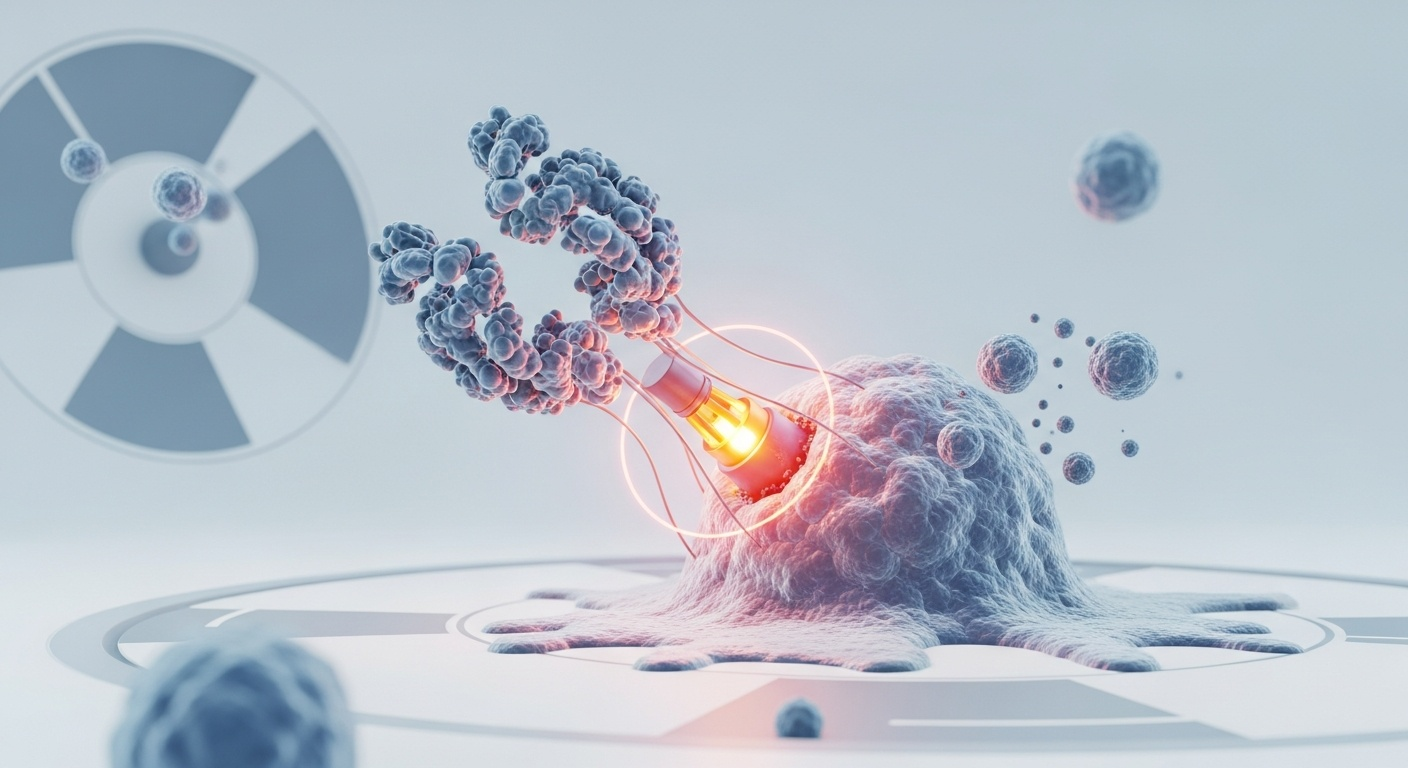
Radionuclide Drug Conjugates (RDC) are emerging as a key component of next-generation precision anti-cancer treatment. RDC technology involves attaching a radioisotope to an antibody or ligand that selectively targets cancer cells, precisely delivering radiation only to the tumor site. If Antibody-Drug Conjugates (ADC) are considered 'guided missile anti-cancer drugs,' RDC are known as 'radioactive missile anti-cancer drugs.' Global pharmaceutical companies have begun to significantly invest in RDC following the announcement of a long-term strategic collaboration for next-generation RDC development by Harbour BioMed and Lannacheng in December 2025. A major advantage of RDC is its ability to perform both diagnosis and treatment simultaneously. Diagnostic radioisotopes can precisely visualize the location and metastasis of cancer (Theranostics), and by switching to therapeutic isotopes, cancer cells can be directly destroyed. RDC has shown particular efficacy in treating bone metastatic cancer. Kelun-Biotech's RDC new drug, SKB107, received approval from China's NMPA in March 2025 for the treatment of bone metastases in solid tumors. Globally, various RDC candidates, including those targeting PSMA (prostate-specific membrane antigen), are entering clinical stages. The RDC market is projected to grow rapidly after 2025. While the ADC market is expected to reach $30 billion by 2030, RDC is closely following suit. According to WuXi AppTec's first-half 2025 report, RDC connects radioisotopes to tissue-targeting ligands, precisely delivering radioactivity to tumors while minimizing damage to healthy tissues. In the future, the indications for RDC are expected to expand beyond solid tumors to include hematological cancers and gliomas. Development speed is also anticipated to accelerate through integration with AI-based drug design technologies. The collaboration between Harbour BioMed and Lannacheng signals that RDC will become a new standard in global anti-cancer treatment.