

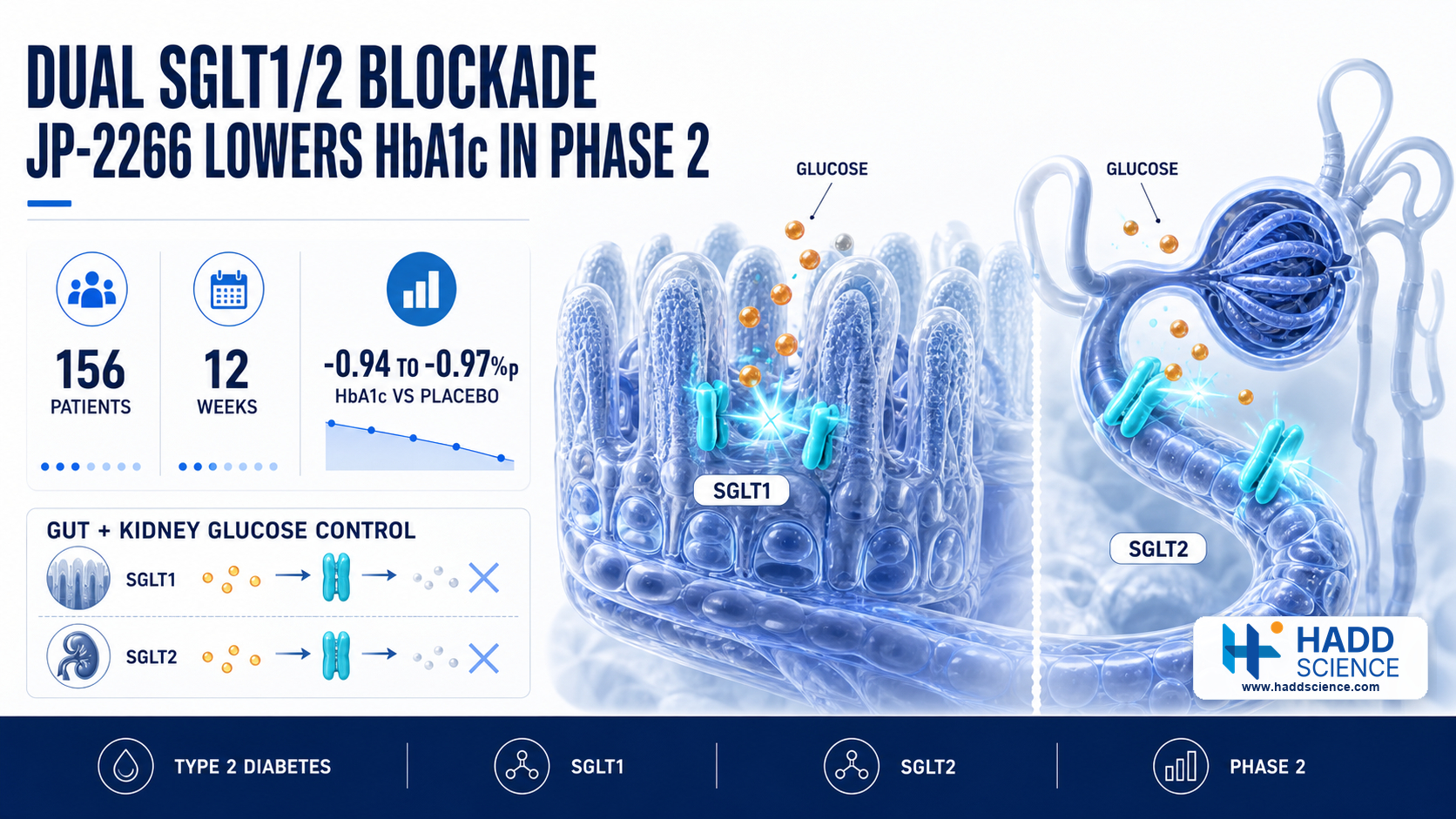
JP-2266, developed by Jeil Pharmaceutical, is an oral diabetes candidate that simultaneously inhibits SGLT1 in the intestines and SGLT2 in the kidneys. This mechanism works by blocking SGLT1 to slow down glucose absorption in the intestines and blocking SGLT2 to increase glucose excretion through urine. The researchers recruited 156 patients with Type 2 Diabetes whose blood glucose was not adequately controlled by diet and exercise alone. Participants received either JP-2266 at 5mg, 10mg, or placebo once daily for 12 weeks. This study was a randomized, double-blind, placebo-controlled Phase 2 clinical trial conducted at 28 institutions in Korea. After 12 weeks, glycated hemoglobin (HbA1c) decreased by an additional 0.94%p in the 5mg group and 0.97%p in the 10mg group compared to placebo, meeting the primary endpoint. The proportion of patients achieving HbA1c below 7.0% was 66.7% and 70.6% respectively, which was higher than the 19.6% in the placebo group. Fasting blood glucose decreased by 28.86-32.01 mg/dL in the treatment groups, and postprandial 2-hour blood glucose decreased by 63.65-68.65 mg/dL. Body weight decreased by approximately 2.0-2.1 kg compared to placebo, and systolic blood pressure decreased by 3.6 mmHg in the 10mg group. The overall incidence of adverse events was similar to the placebo group, and most reported adverse events were mild or moderate. However, these results are short-term data obtained from a relatively small Phase 2 clinical trial conducted over 12 weeks. Since there was no direct comparison with existing SGLT2 inhibitors, it cannot be concluded that the dual inhibition approach is superior to standard treatment. Cardiovascular and renal protective effects, as well as long-term safety, were also not evaluated in this study. Although special interest adverse events were few, the potential for genitourinary and gastrointestinal side effects needs to be continuously monitored in subsequent studies. These results are initial clinical evidence supporting larger and longer-term follow-up clinical trials, not approved treatment efficacy.