

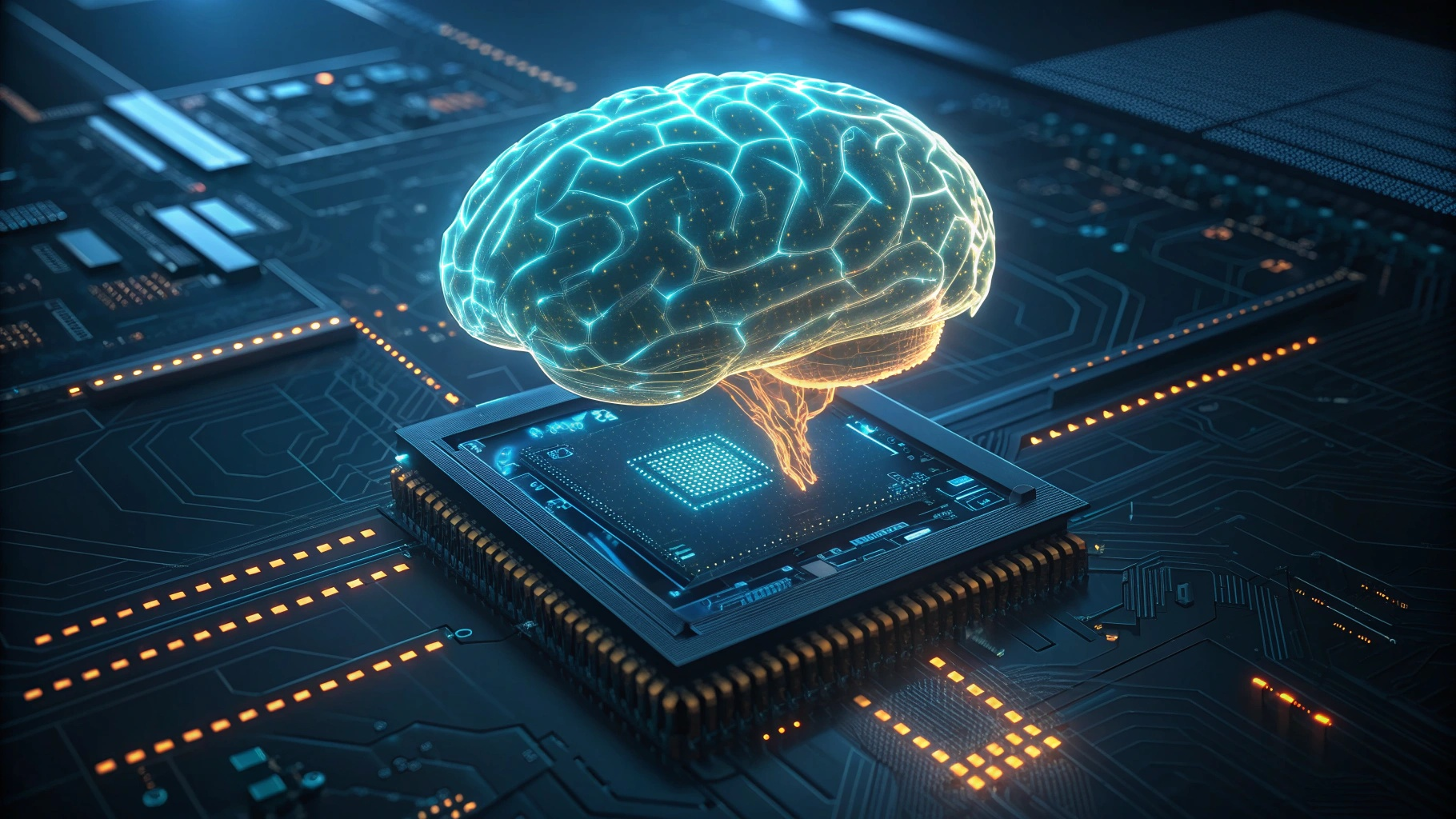
Research teams worldwide, including FinalSpark in Switzerland, are achieving tangible results in 'bio-computing' research, creating supercomputers from human brain cells cultured in laboratories. FinalSpark successfully implemented a low-power biological computer by connecting 16 neural organoids (artificial organs cultured in 3D) derived from human induced pluripotent stem cells (iPSCs). Researchers are conducting 'input → processing → output' experiments, similar to computer circuits, by sending and receiving electrical signals to and from brain organoids, and have succeeded in extending organoid survival to four months. These bio-computers are referred to by a new concept called 'Wetware.' This term signifies 'life-based hardware' composed of living tissue, where living nerve cells store and compute information by exchanging signals with each other, instead of silicon chips. Wetware is designed to adapt, learn, and reconfigure its connections, much like the human brain. FinalSpark and the University of Bristol in the UK recently succeeded in an experiment where brain organoids converted Braille data, read by a robotic finger's tactile sensor, into electrical signals and distinguished them. While the accuracy was 61% using one organoid, it improved to 83% when three were used. Professor Alysson Muotri at UC San Diego is applying bio-computing to an industrial challenge, training 250 brain organoids to predict the spread of an oil spill in the Amazon rainforest. Cortical Labs in Australia successfully taught brain cells to play the 'Pong' game in 2022 and unveiled 'CL1,' the world's first commercial biological computer, in 2025. Koniku Core in the U.S. is developing sensors that combine artificial neurons and semiconductors into hybrid devices to detect smells and chemicals, differentiating explosives, drugs, and diseases like cancer. Bio-computers hold the potential to achieve supercomputer performance with minimal power consumption, making them a key technology for the development of next-generation AI and ultra-low-power computers.